Filing your California state income taxes on time ensures compliance with the California Franchise Tax Board (FTB) and protects you from state late filing penalties. Whether you are a California resident filing individual Form 540, a business owner paying the annual LLC franchise fee, or a nonresident with California-source income, understanding the CA state tax filing deadline is essential.
While the statutory California state tax deadline aligns with the federal April 15 date, California provides an automatic six-month filing extension to October 15 without requiring a paper application form. However, this extension applies only to filing your return—not to paying taxes owed. This guide covers California tax deadlines, Form FTB 3519 payment vouchers, and LLC $800 annual fee rules.
1. Official California State Tax Deadlines for 2026
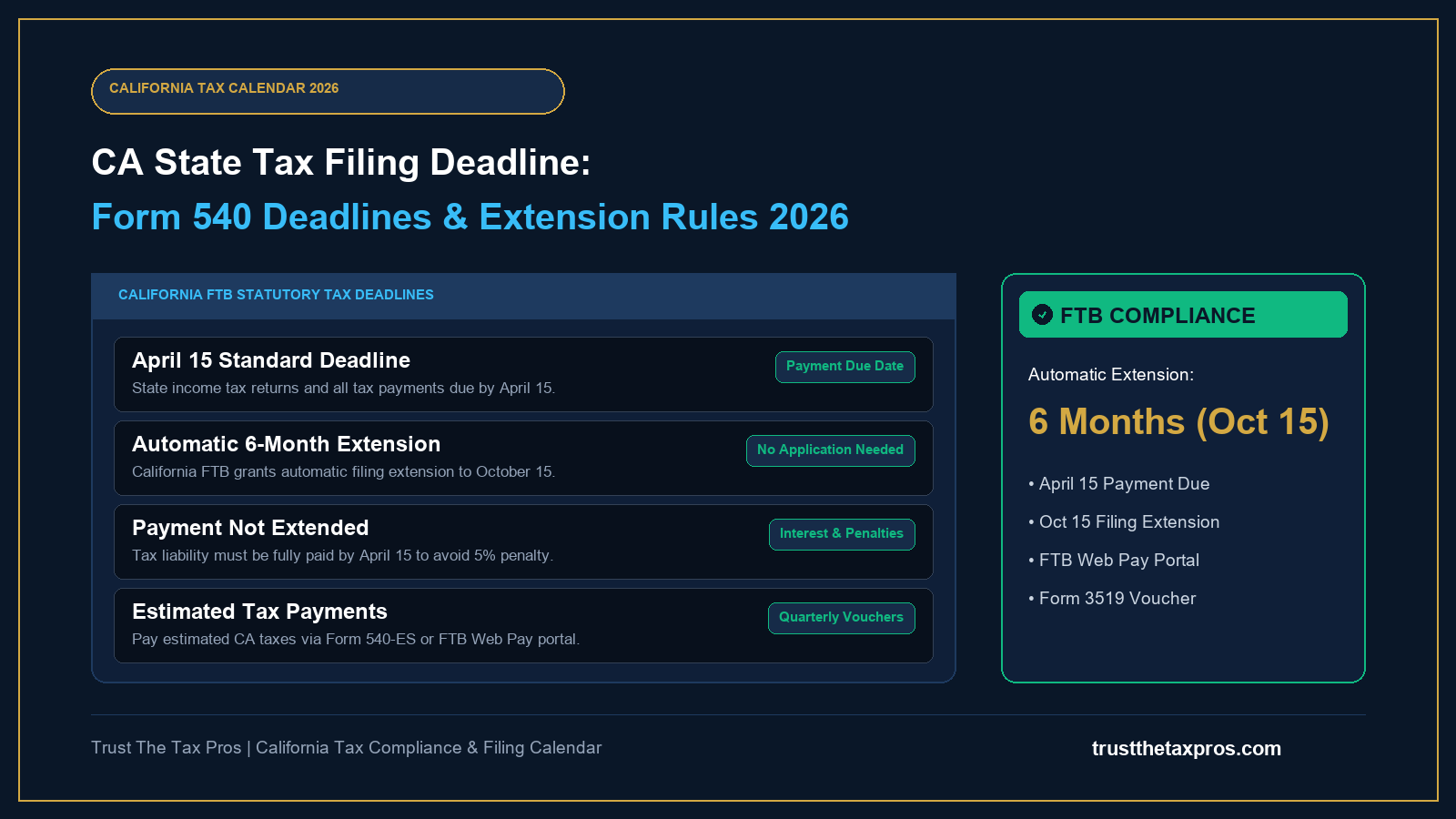
California taxpayers must track several key statutory filing and payment deadlines throughout the tax season:
- April 15 (Annual Return & Payment Deadline): Deadline to submit California Form 540 or Form 540 2EZ and pay any remaining state income tax liability.
- October 15 (Automatic 6-Month Extended Filing Deadline): Final deadline to submit your California individual tax return under the automatic state filing extension.
- April 15 (Form FTB 3519 Extension Payment Deadline): Deadline to pay estimated state taxes owed using Form FTB 3519 to avoid 5% monthly late payment penalties.
- April 15 (California LLC $800 Franchise Tax Due Date): Deadline for California LLCs to submit the annual $800 minimum franchise tax payment via Form FTB 3522 (due the 15th day of the 4th month).
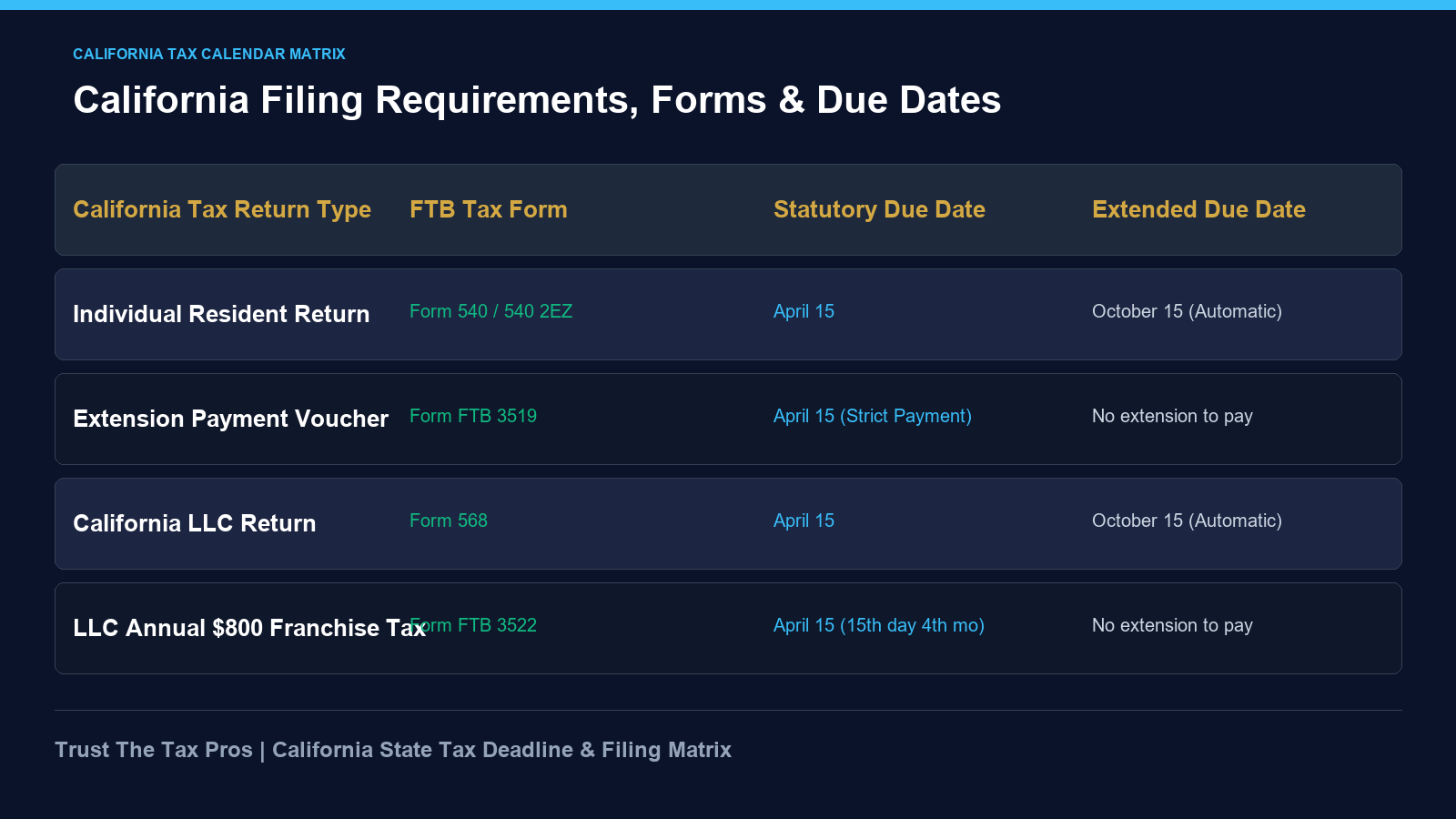
| California Tax Obligation | FTB Tax Form | Statutory Due Date | Extended Filing Date |
|---|---|---|---|
| Individual Resident Return | Form 540 / 540 2EZ | April 15 | October 15 (Automatic) |
| Extension Payment Voucher | Form FTB 3519 | April 15 (Strict Payment) | No extension to pay |
| California LLC Annual Return | Form 568 | April 15 | October 15 (Automatic) |
| LLC Annual $800 Franchise Tax | Form FTB 3522 | April 15 (15th day 4th mo) | No extension to pay |
2. How the California Automatic Tax Extension Works
Unlike the federal IRS process which requires filing Form 4868, California grants an automatic six-month extension to October 15 for all individual taxpayers without requiring any written application.
An extension of time to file your California tax return is NOT an extension of time to pay your tax. If you owe state tax, you must submit payment by April 15 using Form FTB 3519 or FTB Web Pay to avoid late payment penalties (5% plus 0.5% per month) and mandatory statutory interest.
To check expected state refund deposits, explore our CA state tax refund status guide.
3. Step-by-Step California State Tax Filing Workflow
Following a structured compliance process guarantees you submit all necessary California forms on time.
Filing Steps
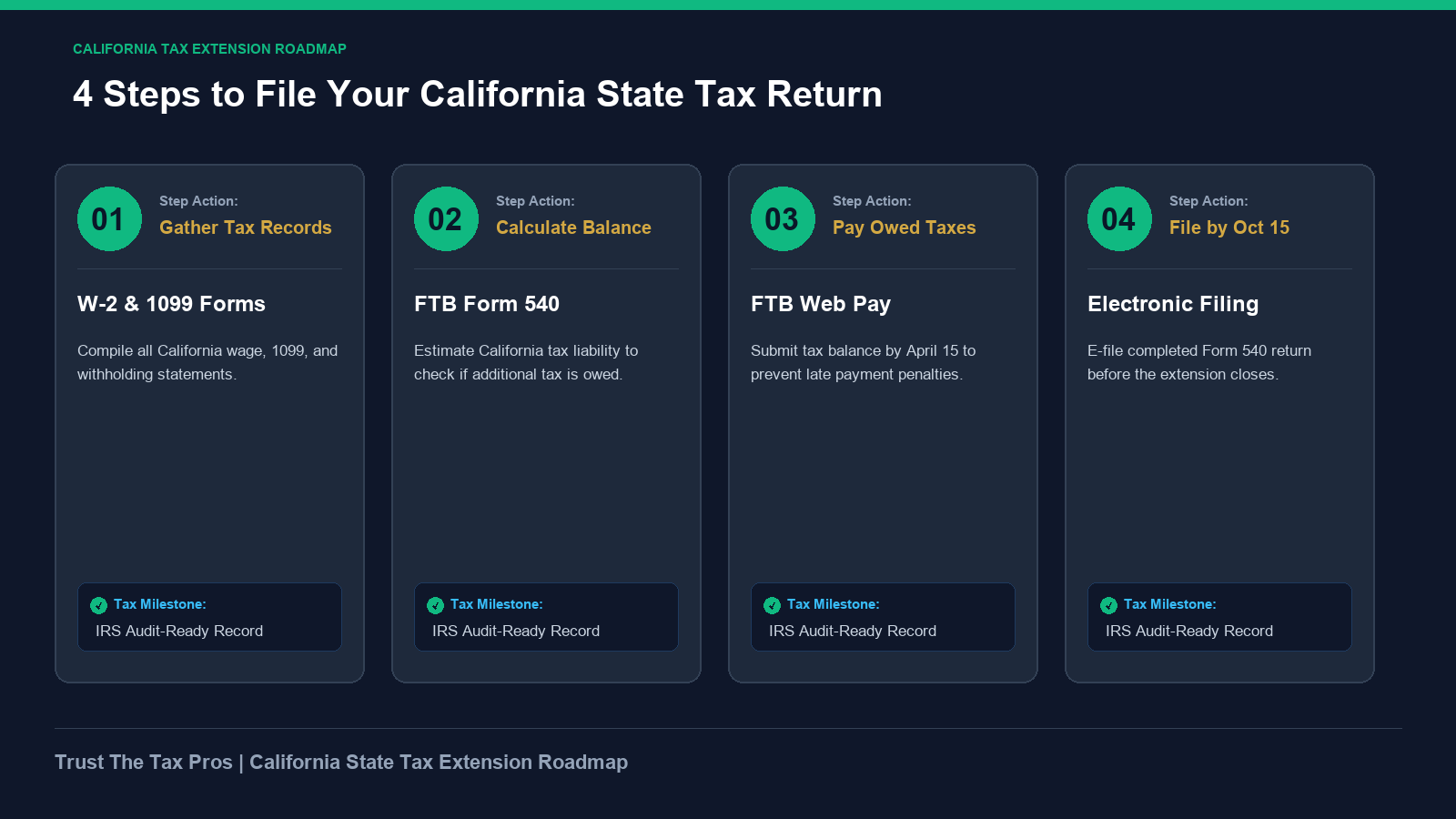
- Collect California Income Records: Gather Form W-2s, 1099s, and California Schedule K-1s showing Golden State wage and investment income.
- Estimate Your State Balance: Complete your Form 540 draft before April 15 to determine if you owe tax or will receive a refund.
- Submit Payment via Web Pay by April 15: If you owe state taxes, make an electronic payment via FTB Web Pay or mail Form FTB 3519 with a check postmarked on or before April 15.
- File Final Return by October 15: E-file your finalized Form 540 return using California CalFile or authorized tax software before October 15.
Review California state tax credits in our California earned income tax credit guide.
Access official state tax services directly on the California Franchise Tax Board official portal.
If you need CPA assistance in Northern California, review advice from a Sacramento tax accountant.
Frequently Asked Questions
What is the deadline to file California state income taxes?
The deadline to file California individual income tax returns (Form 540) is April 15. California grants an automatic 6-month extension to October 15 to submit your return.
Do I need to file a form to get a California tax extension?
No. California provides an automatic six-month extension to October 15 without filing an extension form, as long as you do not owe unpaid state taxes. If you owe tax, you must submit payment with Form FTB 3519 by April 15.
When is the California LLC $800 franchise tax due?
The annual $800 LLC minimum franchise tax is due by the 15th day of the 4th month of the tax year (April 15 for calendar-year businesses) using Form FTB 3522.
What happens if I file or pay my California taxes late?
The FTB assesses a late-filing penalty of 5% per month (up to 25%) plus a late-payment penalty of 5% of unpaid taxes plus 0.5% per month, along with compounding interest.
Keep Your California Taxes Fully Compliant
Meeting the CA state tax filing deadline protects you from expensive state penalties and ensures you claim all available California tax credits. Calculate your state balance early, submit any payment owed by April 15, and file your finalized Form 540 before October 15.
Consult a licensed California CPA or Enrolled Agent to optimize your state deductions and ensure error-free electronic tax filing.