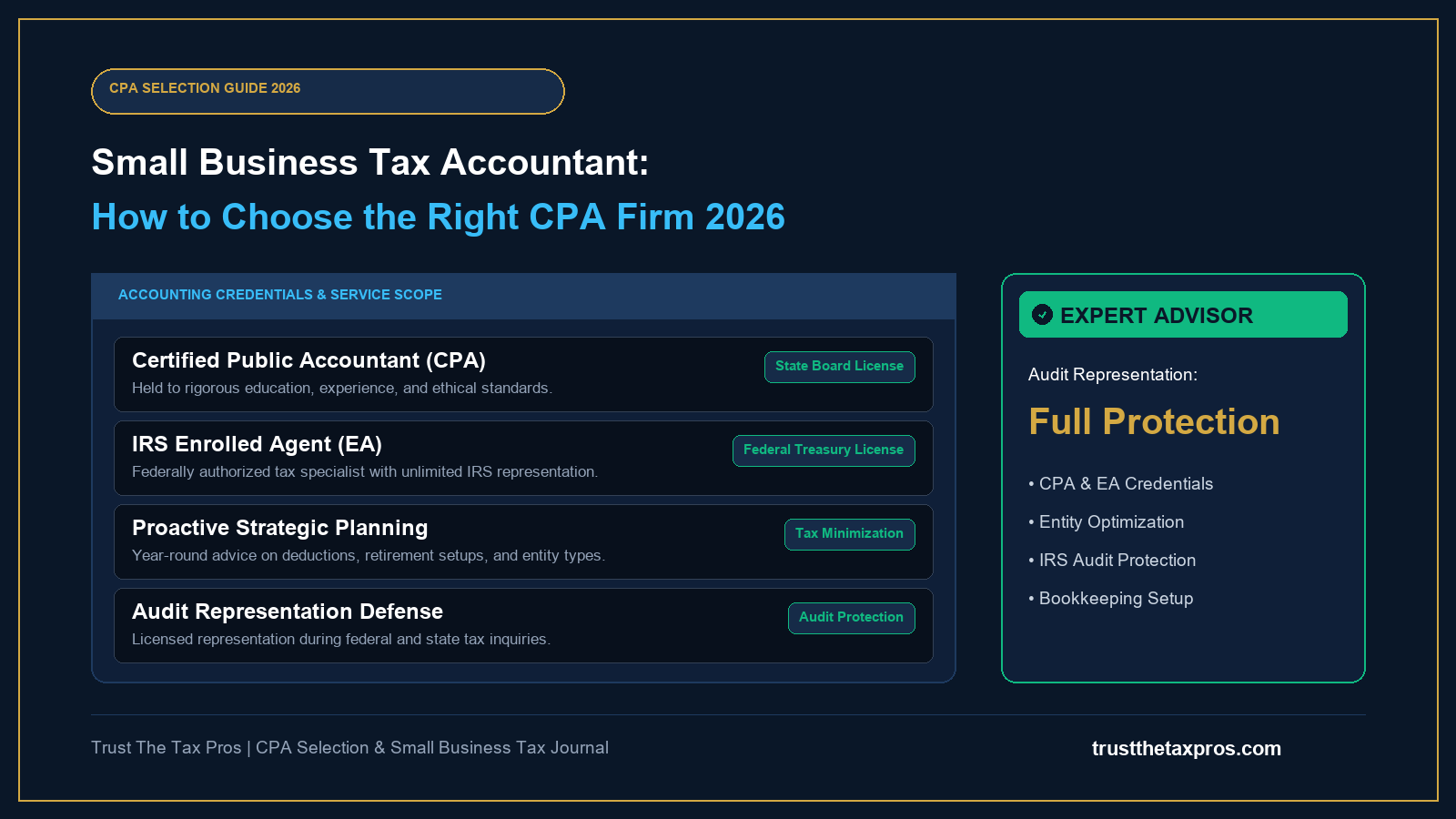
Hiring a qualified small business tax accountant is one of the most critical decisions an entrepreneur can make. As your company grows, tax regulations become increasingly complex. From managing quarterly estimated tax payments to optimizing corporate structure and claiming eligible write-offs, expert accounting guidance protects your company assets and keeps you compliant with federal and state tax authorities.
Whether you operate as a sole proprietor, single-member LLC, S-Corporation, or multi-member partnership, working with a dedicated small business CPA goes far beyond annual return preparation. This guide outlines how to select a skilled tax accountant, evaluate pricing structures, leverage strategic tax planning, and maximize deductions for your business.
1. Why Small Businesses Need a Dedicated Tax Accountant
Many startup founders attempt to manage bookkeeping and tax filings using basic accounting software. While software handles routine income tracking, it cannot provide forward-looking tax strategy, identify industry-specific deductions, or defend your business during an IRS audit.
Key advantages of hiring a professional tax accountant include:
- Strategic Entity Selection: Evaluating whether electing S-Corporation status reduces your self-employment tax burden once net profit exceeds $50,000.
- Proactive Tax Planning: Implementing year-end tax strategies before December 31 to legally reduce taxable corporate income.
- IRS & State Audit Protection: Credentialed CPAs and Enrolled Agents hold full legal rights to represent your business before tax agencies.
| Professional Credential | Average Annual Cost | Audit Representation Rights | Best Suited For |
|---|---|---|---|
| Certified Public Accountant (CPA) | $1,500 – $5,000+ | Full IRS Representation | Growing LLCs, S-Corps, C-Corps, multi-state enterprises |
| Enrolled Agent (EA) | $800 – $2,500 | Full IRS Representation | Sole proprietors, 1099 freelancers, tax audit defense |
| Professional Bookkeeper | $150 – $400/mo | No Representation Rights | Monthly transaction entry, invoicing, bank reconciliation |
2. Key Responsibilities of a Small Business Tax CPA
Understanding what services a small business tax accountant provides helps you establish clear expectations and maximize the value of your financial engagement.
Quarterly Estimated Tax Calculations
Unlike W-2 employees who have income tax withheld automatically from paychecks, business owners must make quarterly estimated tax payments to the IRS and state tax agencies. Your tax accountant calculates accurate quarterly payments, preventing costly late-payment penalties and surprise year-end tax bills.
Entity Structuring and S-Corp Tax Elections
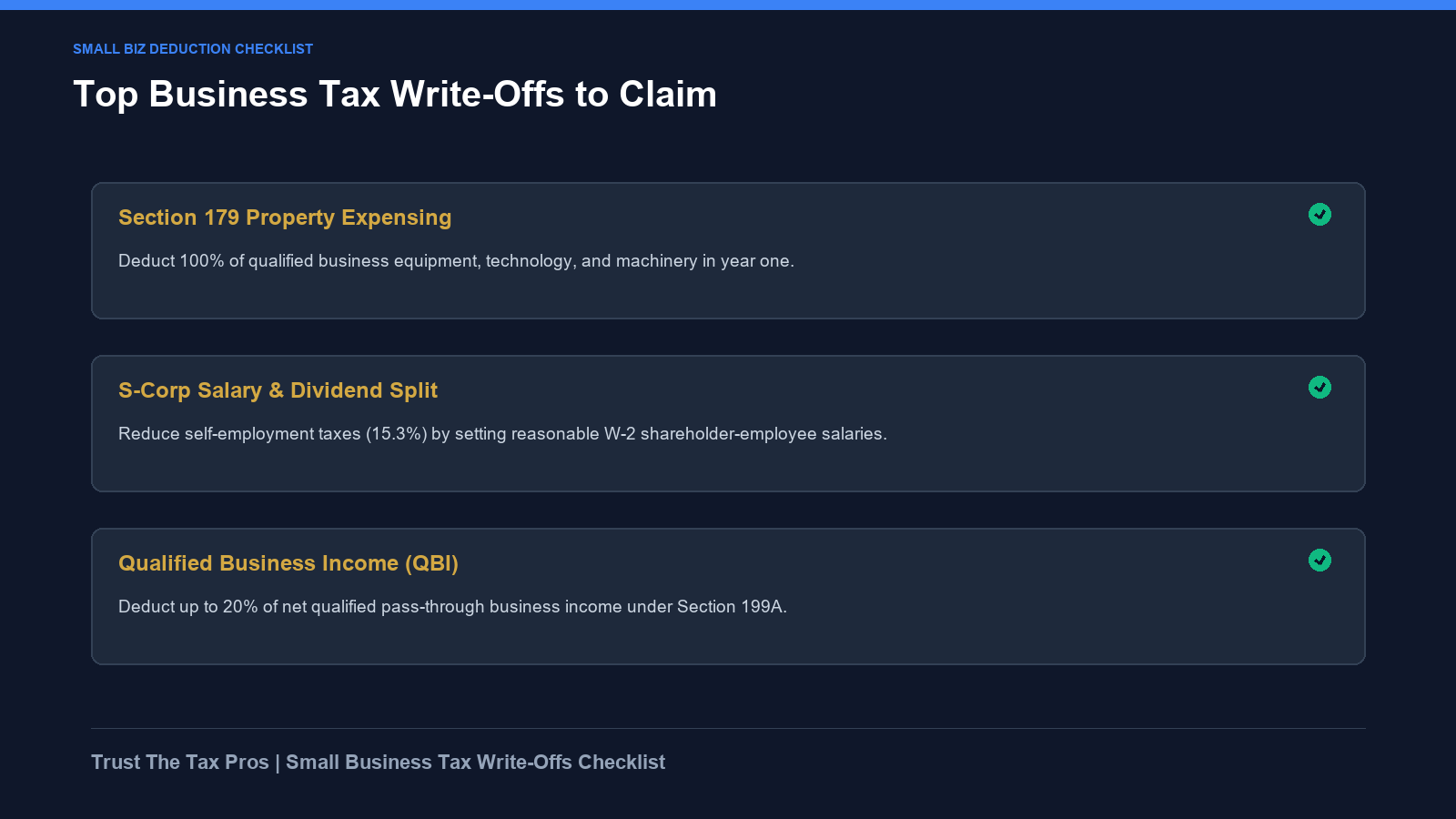
Operating as a default Sole Proprietorship subjects all net earnings to the 15.3% self-employment tax. A skilled tax CPA evaluates whether electing S-Corporation tax status (Form 2553) allows you to split net profits into reasonable W-2 owner compensation and shareholder distributions, legally saving thousands of dollars in payroll taxes.
For additional compliance guidelines, check our business tax services guide.
3. Top Small Business Tax Deductions and Write-Offs to Claim
A major benefit of working with an experienced tax professional is ensuring your business claims every legitimate tax deduction permitted under federal and state law.
- Section 179 Property Depreciation: Deduct 100% of the cost of qualifying machinery, computers, and business equipment in year one.
- Qualified Business Income (QBI) Deduction: Eligible pass-through business owners can deduct up to 20% of net business income under Section 199A.
- Business Vehicle Expenses: Claim standard IRS mileage rates or actual vehicle operating expenses with detailed mileage logs.
- Home Office Deduction: Deduct a portion of rent, utilities, and internet for space used exclusively for business operations.
Accounting and Legal Fee Deductibility
Unlike individual W-2 taxpayers who cannot deduct tax prep fees, small business owners can deduct 100% of professional accounting, bookkeeping, and tax preparation expenses directly as an ordinary business expense on Schedule C, Form 1120-S, or Form 1065.
To learn about affordable tax options, explore our affordable tax preparation guide.
4. How to Interview and Select a Small Business Tax Accountant
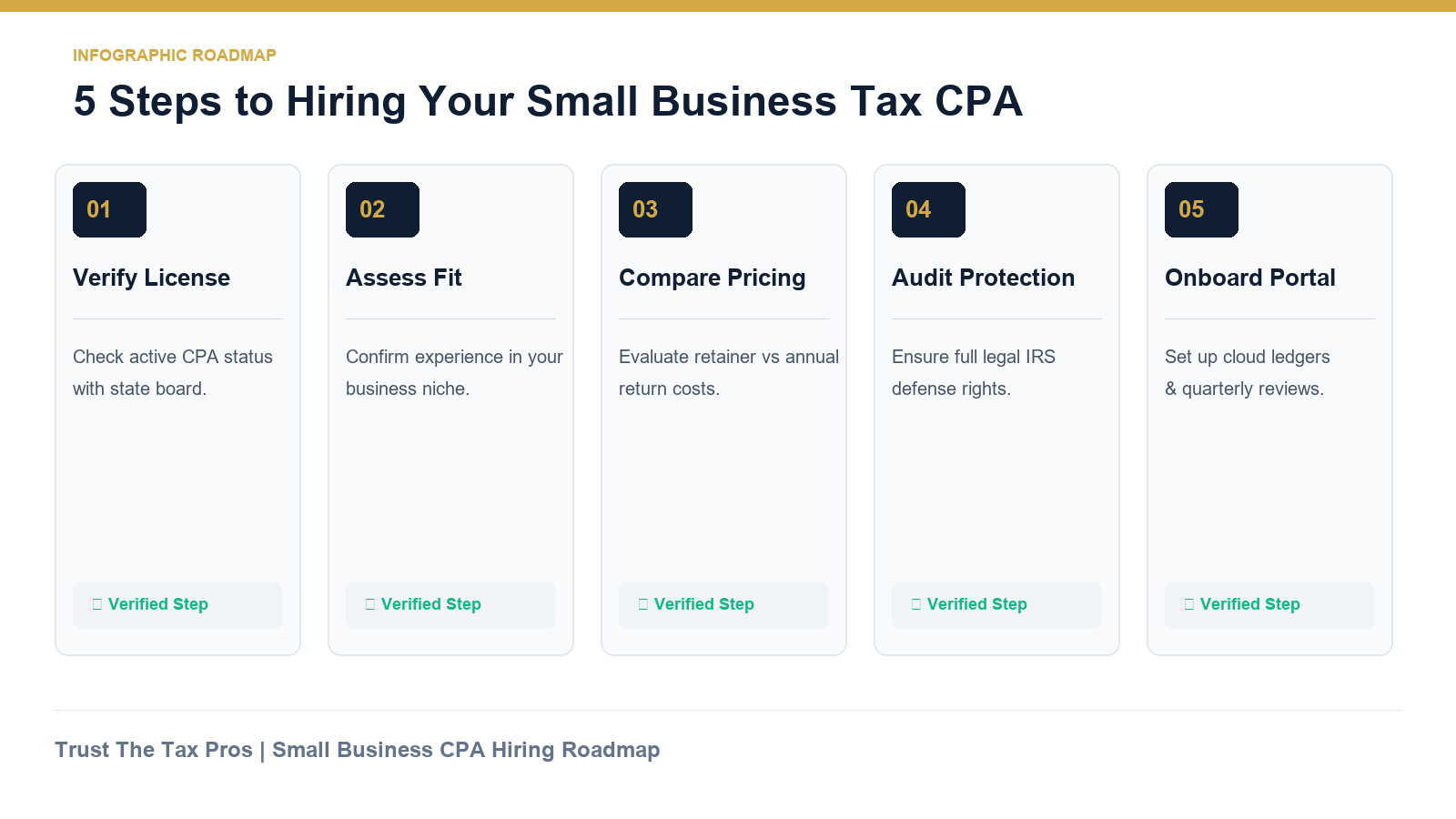
Before signing an annual engagement letter with a tax accountant, conduct a thorough interview to confirm their qualifications, industry experience, and fee structure.
Essential Questions to Ask During Your Consultation
- Do you hold an active CPA license or Enrolled Agent credential? Verify CPA licenses through your state board of accountancy directory or Enrolled Agent credentials via the Federal Register.
- What experience do you have in my specific industry? Industry specialization ensures your accountant understands niche deduction rules, inventory accounting, and sales tax compliance.
- What is your fee structure and billing frequency? Clarify whether fees are billed hourly, per tax schedule, or as a fixed monthly advisory retainer.
- Are you available for year-round tax planning? Ensure your tax advisor is accessible throughout the year, not just during tax season.
Verify official CPA licensing standards through the American Institute of CPAs and federal practitioner standards via the Internal Revenue Service.
If operating a business in Northern California, review our guide on choosing a Sacramento tax accountant.
5. Common Mistakes Small Businesses Make with Tax Accountants
Partnering with a tax accountant requires active collaboration. Avoiding common relationship errors keeps your corporate books clean and prevents audit vulnerabilities.
Mistakes to Avoid
- Waiting Until April to Organize Financial Records: Waiting until tax deadlines leaves no room for strategic planning and increases preparation fees.
- Commingling Personal and Business Funds: Mixing personal receipts with corporate accounts weakens liability protection and complicates deduction reporting.
- Hiring Uncredentialed Preparers: Seasonal retail preparers lack authorization to represent your business during formal IRS or state tax audits.
Review accredited EA credential standards through the National Association of Enrolled Agents.
Frequently Asked Questions
How much does a small business tax accountant cost?
Small business tax preparation costs range from 500 to 2,500 dollars for annual tax returns depending on entity structure (LLC, S-Corp, Partnership). Ongoing monthly accounting and tax advisory packages generally range from 150 to 450 dollars per month.
What is the difference between a CPA and a bookkeeper?
Bookkeepers record daily transactions, categorize expenses, and reconcile bank statements. CPAs are state-licensed professionals who analyze financial statements, design tax strategies, file corporate returns, and represent clients during IRS audits.
When should a small business hire a tax accountant?
You should hire a tax accountant as soon as you form your business entity or when net earnings exceed 50,000 dollars. Early engagement ensures proper setup of accounting software, quarterly estimated payments, and entity tax elections.
Can a tax accountant help reduce my self-employment taxes?
Yes. A small business tax accountant can analyze your gross income and assist in electing S-Corporation tax status, allowing you to split earnings into W-2 salary and distributions to reduce self-employment tax obligations.
Are tax accountant fees tax deductible for small businesses?
Yes. Professional tax preparation and accounting fees are 100% deductible as an ordinary business expense for self-employed individuals, LLCs, S-Corporations, and Partnerships.
Partnering with the Right Small Business CPA
Hiring the right small business tax accountant provides financial security, reduces annual tax liabilities, and ensures full legal compliance. Evaluate credentials early, organize your financial records, and establish a year-round relationship with a trusted CPA or Enrolled Agent.
Take control of your corporate finances today by scheduling a consultation with a qualified tax accountant.