Receiving an audit notice from the Internal Revenue Service (IRS) causes immediate stress for any taxpayer. While less than 1% of individual tax returns undergo formal examination each year, specific red flags dramatically increase your audit risk. Understanding IRS audit triggers and implementing proper recordkeeping habits keeps your tax filings off the audit radar.
The IRS relies heavily on automated screening algorithms, including the Discriminant Inventory Function (DIF) score, to flag returns with unusual deductions, income mismatches, or mathematical errors. Implementing proven IRS audit avoidance tips reduces audit risk, protects your refund, and ensures full compliance with federal tax laws.
1. How the IRS Selects Tax Returns for Audit
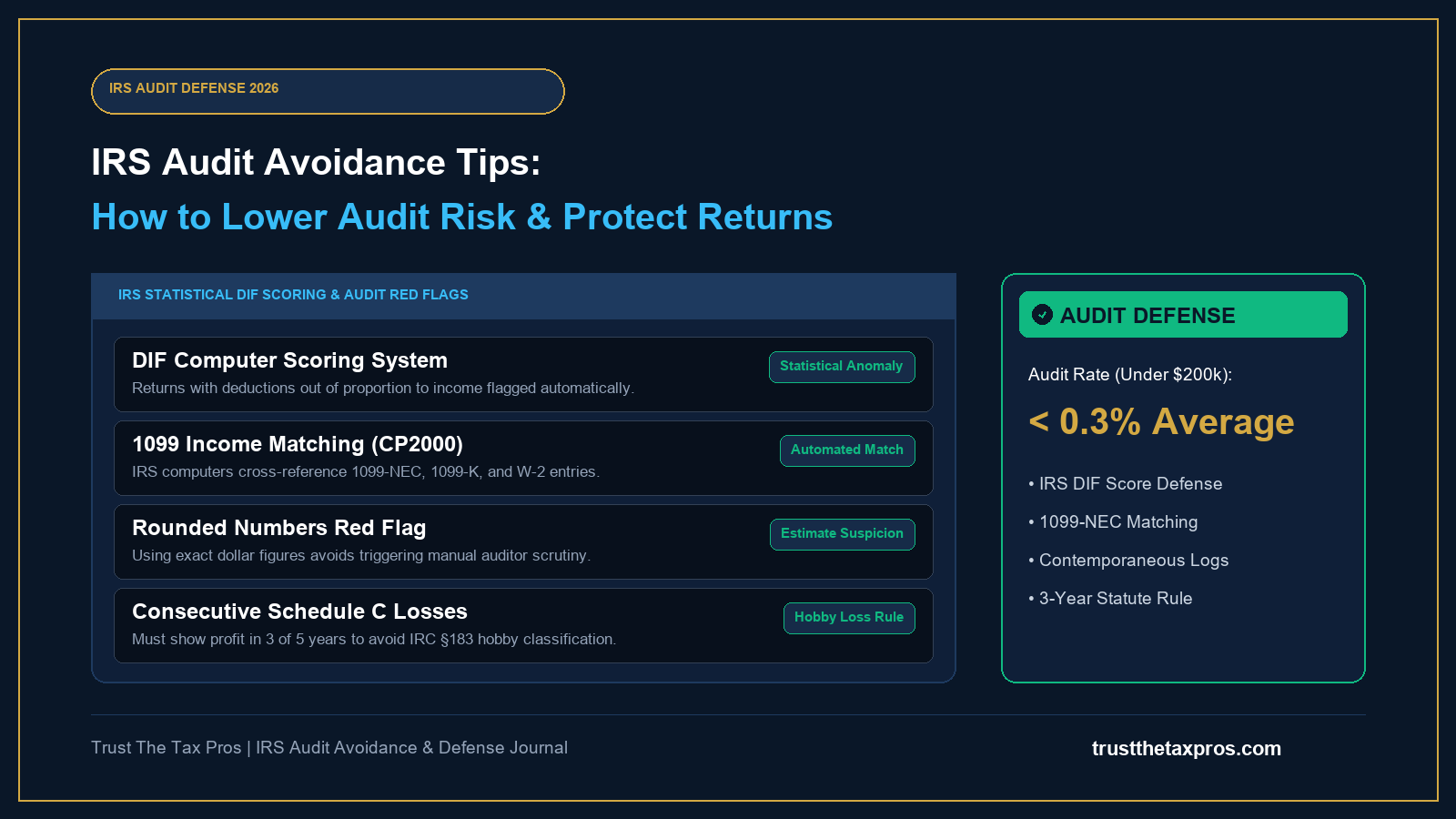
The IRS does not choose tax returns at random. Automated computer scoring systems evaluate every return submitted to federal servers, assigning numeric scores based on historical audit data and statistical norms.
Three main mechanisms drive IRS audit selection:
- DIF Computer Scoring: The IRS compares your income, deductions, and credits against statistical averages for taxpayers in your income bracket. Deviations generate a high DIF score, flagging the return for human examiner review.
- Automated Document Matching (CP2000 System): IRS computers automatically cross-reference income reported on your Form 1040 against third-party information returns, including Forms W-2, 1099-NEC, 1099-MISC, 1099-K, and 1099-B.
- Related Taxpayer Examinations: If your business partner, employer, or primary vendor undergoes an audit, the IRS may examine related returns to confirm consistency across financial transactions.
| Audit Trigger Category | Risk Level | Primary IRS Concern | Best Prevention Strategy |
|---|---|---|---|
| Unreported 1099 Income | High (Automated) | Mismatch between reported income and payer 1099 filings | Reconcile all 1099-NEC, 1099-K, and bank deposits before filing |
| Consecutive Schedule C Losses | High | Hobby loss rules under IRC Section 183 | Show net profit in 3 out of 5 consecutive tax years |
| 100% Business Vehicle Claim | Medium-High | Unsubstantiated personal mileage claimed as business write-off | Maintain contemporaneous mileage logs with date, origin, destination |
| Excessive Charitable Contributions | Medium | Donations disproportionate to reported Adjusted Gross Income | Keep written bank logs, Form 8283, and qualified appraisals for non-cash gifts |
2. Top Red Flags That Trigger IRS Audits
Avoiding an IRS audit requires recognizing the exact reporting errors and aggressive deduction claims that draw scrutiny. Addressing these areas before submitting your return keeps your filing clean.
Unreported Income and 1099 Mismatches
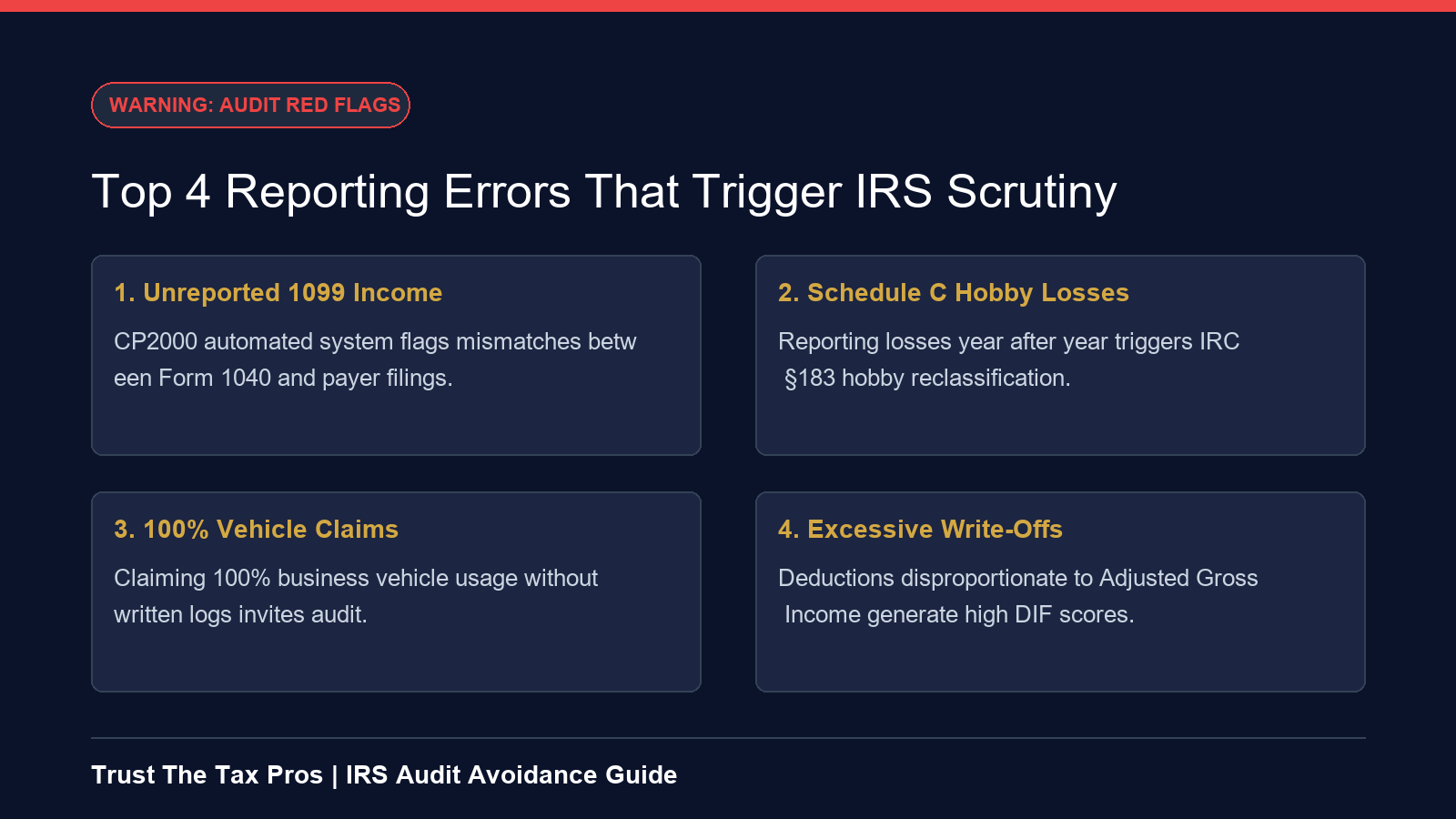
Failing to report all taxable income is the fastest way to trigger an automated IRS inquiry. If a client, broker, or payment processor files a Form 1099 with the IRS, computer systems match that form against your reported gross receipts. Ensure all 1099-NEC, 1099-K, 1099-B, and dividend statements match your tax return exactly.
Excessive Schedule C Business Deductions
Self-employed individuals and freelancers who file Schedule C face higher audit rates than W-2 wage earners. Claiming business expenses that appear disproportionate to gross income raises immediate flags. For example, reporting 50,000 dollars in gross revenue with 48,000 dollars in travel, meals, and supply expenses invites scrutiny.
Claiming 100% Business Use of Personal Vehicles
Claiming that a vehicle is used 100% for business purposes is a major red flag, especially if you do not own a second personal vehicle. IRS examiners know that most taxpayers use vehicles for personal errands. Always maintain a written or digital mileage log documenting business trips, dates, starting locations, and ending destinations.
Rounded Numbers Across Financial Reports
Reporting rounded numbers (such as 5,000 dollars for office expenses, 1,000 dollars for supplies, and 2,000 dollars for travel) signals estimated data rather than actual accounting. IRS examiners inspect returns with exact figures down to the dollar, as rounded numbers suggest a lack of organized receipts.
For small business filing requirements, read our business tax services guide to maintain corporate compliance.
3. Essential IRS Audit Avoidance Tips for Individual and Business Filers
Implementing structured accounting habits throughout the tax year significantly lowers your audit profile while providing complete documentation if questioned.
Key IRS Audit Avoidance Best Practices
- E-File Your Tax Return: Electronic filing reduces processing error rates from 20% on paper returns down to less than 1%.
- Separate Personal and Business Accounts: Maintain dedicated business checking accounts and credit cards to prevent commingling funds.
- Attach Explanatory Statements: If reporting an unusual tax event, attach a formal statement detailing the legal or financial basis.
- File Returns on Time: Late filings and unpaid taxes increase scrutiny and trigger mandatory statutory failure-to-file penalties.
1. Reconcile All Information Returns Before E-Filing
Never file your tax return until you have received and verified every 1099, W-2, and 1098 form for the tax year. If you receive a corrected 1099 after filing, file an amended return (Form 1040-X) promptly to correct reported figures before the IRS issues a notice.
2. Follow the IRS Hobby Loss Rules
If you run a small business or side hustle that consistently reports losses, the IRS may reclassify your activity as a hobby under Internal Revenue Code Section 183. Hobbies cannot deduct expenses exceeding hobby income. To protect your business status, demonstrate a clear profit motive by maintaining separate accounting ledgers, business licenses, and earning a net profit in at least 3 out of 5 consecutive years.
3. Maintain Documentation for Large Charitable Gifts
Claiming large charitable donations relative to your income triggers automated reviews. For non-cash charitable contributions over 500 dollars, you must file Form 8283. For non-cash gifts exceeding 5,000 dollars, the IRS requires a formal written appraisal from a qualified appraiser attached to your return.
To learn more about professional filing options, check our tax preparation services near me selection guide.
4. How Long Does the IRS Have to Audit Your Return?
Understanding the IRS statute of limitations helps you maintain records for the required timeframe. Under federal law, the IRS maintains specific timeframes to examine returns and assess additional tax.
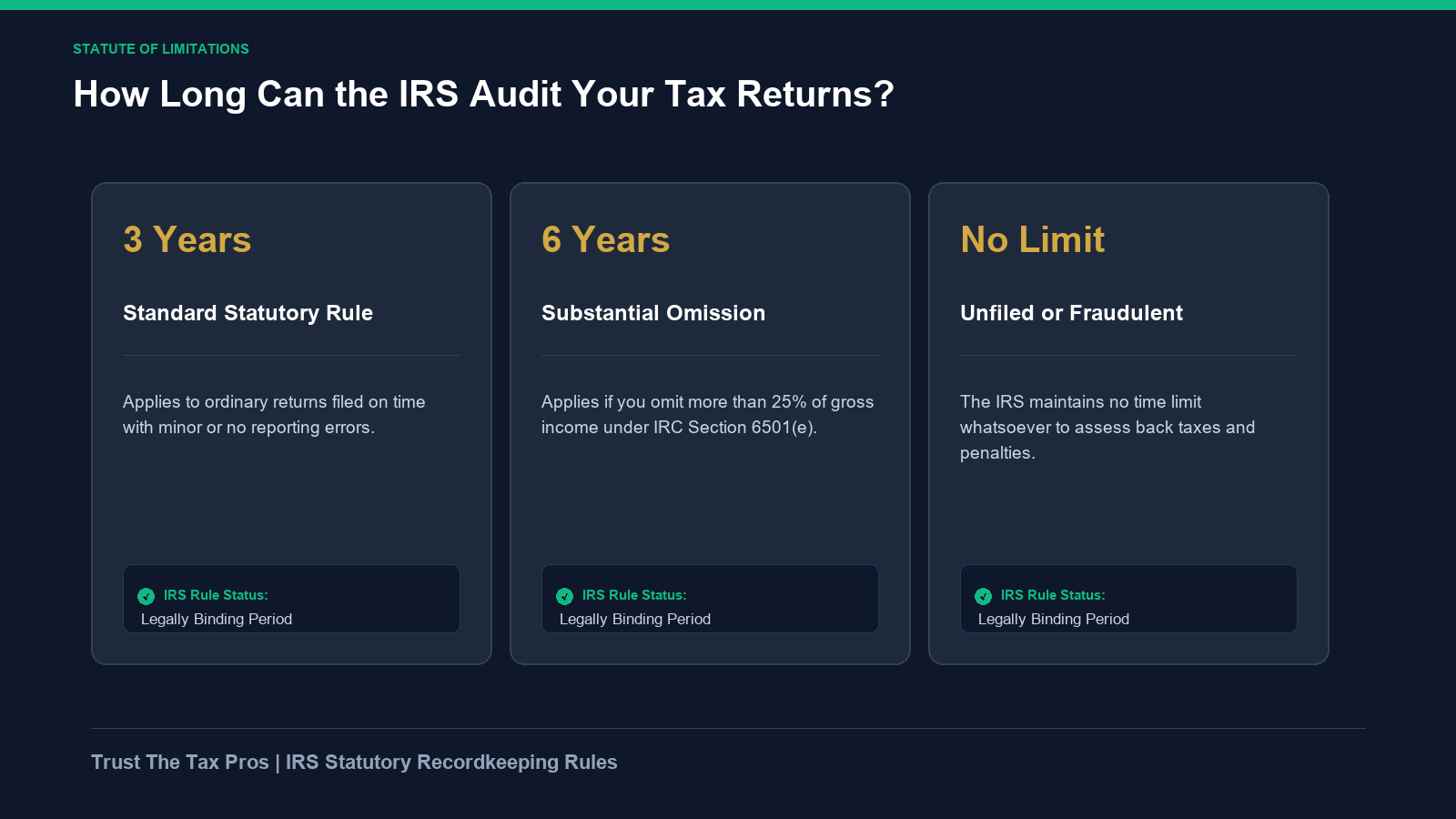
- Standard 3-Year Statute: For most returns filed on time, the IRS has three years from the filing deadline (or actual filing date, whichever is later) to initiate an audit.
- 6-Year Statute for Substantial Omissions: If you omit more than 25% of your gross income from your return, the statute of limitations extends to six years under Internal Revenue Code Section 6501(e).
- No Statute Limit for Fraud or Unfiled Returns: If you fail to file a tax return or submit a fraudulent return, the IRS maintains no time limit. The agency can examine records and assess taxes decades later.
Review statutory rules on the official Internal Revenue Service web portal.
For self-employed tax preparation advice, review our individual tax filing guide.
5. What to Do If You Receive an IRS Audit Letter
Receiving an audit notice does not mean you made a mistake or owe money. Many IRS inquiries are simple correspondence audits requesting documentation for a single line item.
Steps to Take Upon Receiving a Notice
- Read the Notice Carefully: Identify the specific form number (such as CP2000 or Letter 566) and the specific line items under review.
- Respect All Deadlines: IRS audit letters specify strict response deadlines, typically 30 days. Requesting an extension in writing preserves your appeal rights if you need extra time to gather receipts.
- Hire Credentialed Audit Representation: Certified Public Accountants (CPAs) and Enrolled Agents (EAs) registered with the American Institute of CPAs or the National Association of Enrolled Agents hold full legal rights to represent you before the IRS.
Frequently Asked Questions
What triggers an automated IRS CP2000 audit notice?
An IRS CP2000 notice triggers when reported income on your Form 1040 does not match income data submitted by payers on Forms W-2, 1099, or 1098. The automated system compares reported numbers and issues a proposed adjustment notice outlining tax, interest, and penalties owed.
Does filing a tax extension increase your audit risk?
No. Filing Form 4868 for an automatic six-month extension to file your return does not increase your audit risk. IRS statistics confirm that extension returns undergo audit selection at identical rates to returns filed by the April 15 deadline.
How far back can the IRS audit your tax returns?
The IRS generally audits tax returns within three years of filing. However, if the IRS identifies a substantial understatement of income exceeding 25% of gross receipts, the audit window extends to six years. Unfiled returns and fraudulent filings maintain no statute of limitations.
Can you prevent an IRS audit by filing paper returns instead of e-filing?
No. Paper tax returns undergo manual data entry by IRS personnel, which increases processing errors to nearly 20%. E-filing reduces error rates below 1% and ensures proper attachment of all supporting schedules, making e-filing the safer choice.
What happens if you cannot find receipts during an IRS audit?
If you lack written receipts or bank records to substantiate claimed deductions, the IRS examiner will disallow those deductions. This results in additional tax assessments, statutory failure-to-pay penalties, and accrued interest back to the original due date.
Final Steps: Protect Your Tax Return from IRS Scrutiny
Implementing proven IRS audit avoidance tips protects your assets and provides peace of mind every tax season. Reconcile all income statements, maintain accurate mileage and expense logs, and work with a credentialed CPA or Enrolled Agent to prepare complex filings.
Gather your financial documentation early, keep detailed records, and consult a qualified tax professional to keep your tax filings audit-proof.