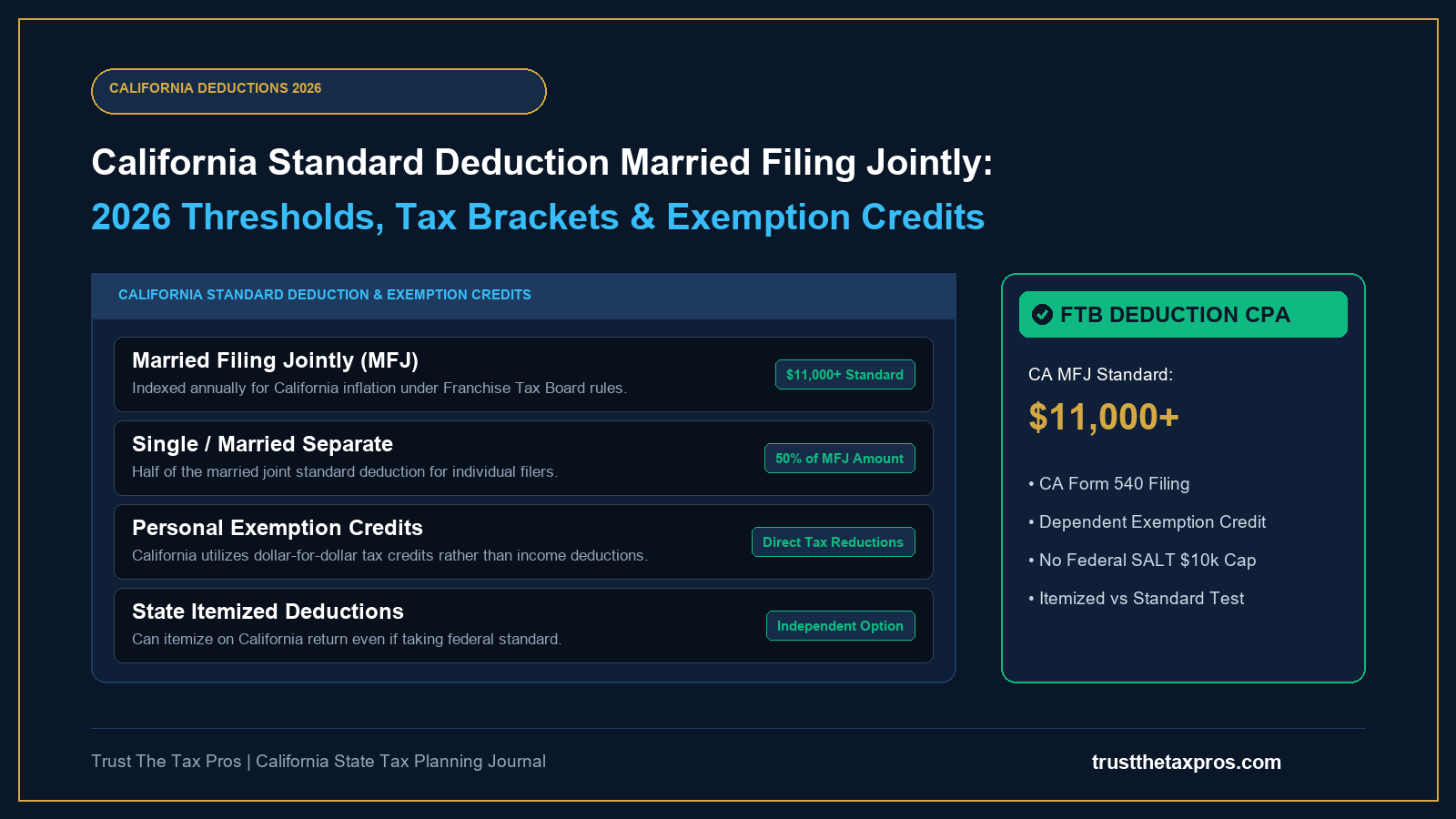
When preparing your California state income tax return (Form 540), understanding how California’s deduction architecture differs from the federal tax code is critical. While federal tax reform significantly increased the federal standard deduction and capped state and local tax (SALT) write-offs, California maintains its own statutory deduction amounts, personal exemption credits, and itemized deduction rules.
For married couples filing jointly in the Golden State, claiming the California standard deduction for married filing jointly provides an immediate reduction in taxable California Adjusted Gross Income (AGI). This guide explains California Form 540 standard deduction rates, personal and dependent exemption credits, and how to optimize deductions using California Schedule CA (540).
1. Official California Standard Deduction Rates for 2026
The California Franchise Tax Board (FTB) indexes state standard deductions annually for inflation. For the current tax year, standard deduction thresholds on California Form 540 Line 18 include:
- Married / RDP Filing Jointly (MFJ): $11,412.
- Head of Household (HOH): $11,412.
- Qualifying Surviving Spouse: $11,412.
- Single Taxpayer: $5,706.
- Married / RDP Filing Separately (MFS): $5,706.
- Minimum Standard Deduction for Dependents: $1,350.
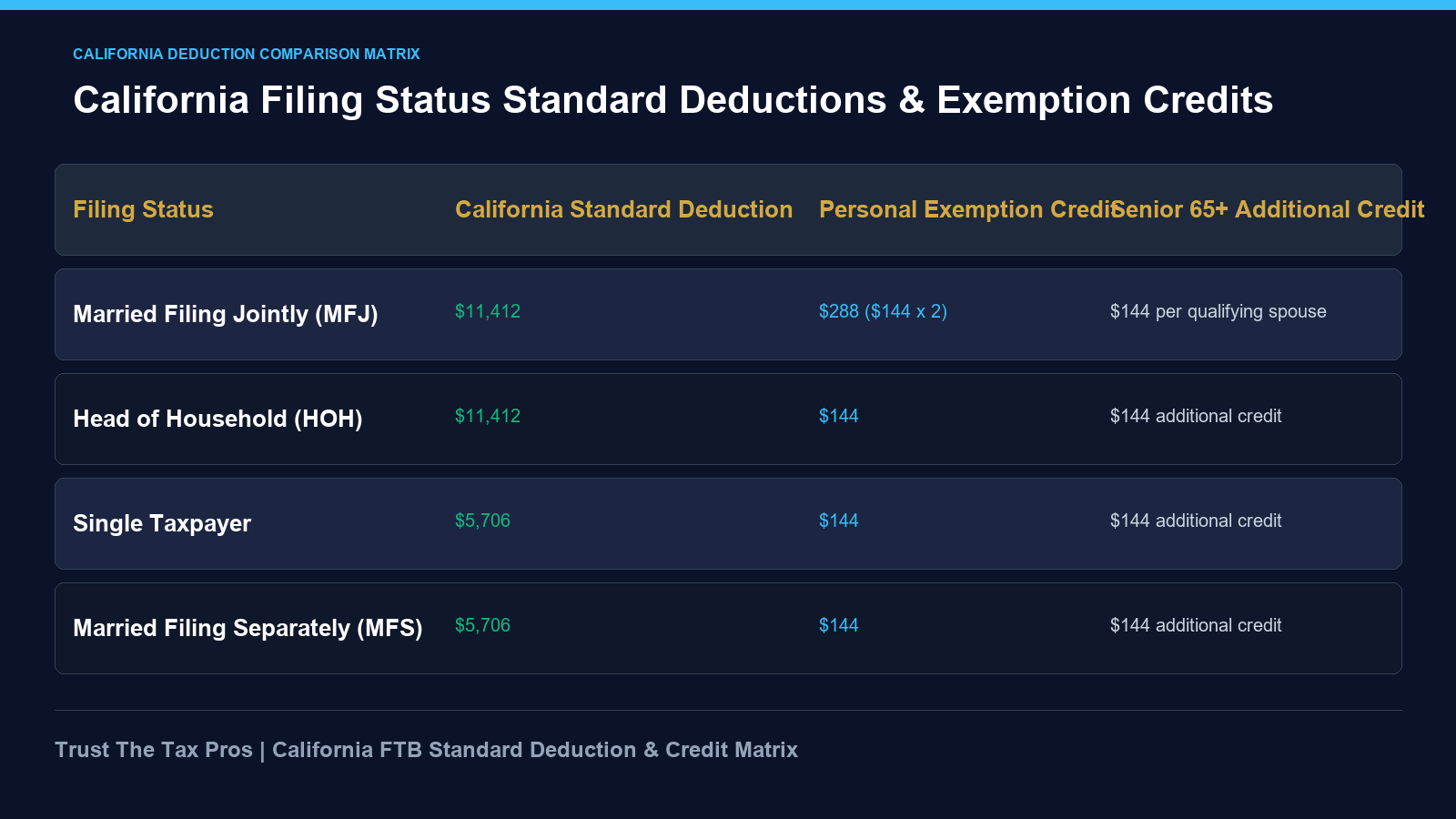
| California Filing Status | California Standard Deduction | Personal Exemption Credit | Form 540 Line |
|---|---|---|---|
| Married Filing Jointly (MFJ) | $11,412 | $288 ($144 x 2) | Line 18 & Line 32 |
| Head of Household (HOH) | $11,412 | $144 | Line 18 & Line 32 |
| Single / Filing Separately | $5,706 | $144 | Line 18 & Line 32 |
2. California Exemption Credits vs Federal Deductions
Unlike the federal IRS tax system which eliminated personal exemptions in favor of higher standard deduction amounts, California provides direct tax exemption credits that reduce your tax bill dollar-for-dollar:
- Personal Exemption Credit: $144 to $149 per taxpayer ($288 to $298 for married couples filing jointly).
- Senior Exemption Credit (Age 65+): An additional $144 credit per qualifying spouse who reached age 65 before year-end.
- Dependent Exemption Credit: $446+ for each qualifying child or dependent claimed on your California return.
To compare federal brackets, review our 2026 tax brackets married filing jointly guide.
3. California Schedule CA (540): Standard vs Itemized Strategy
A major strategic advantage in California tax planning is that California allows taxpayers to itemize deductions on Form 540 Schedule CA even if they claimed the standard deduction on their federal Form 1040 return.
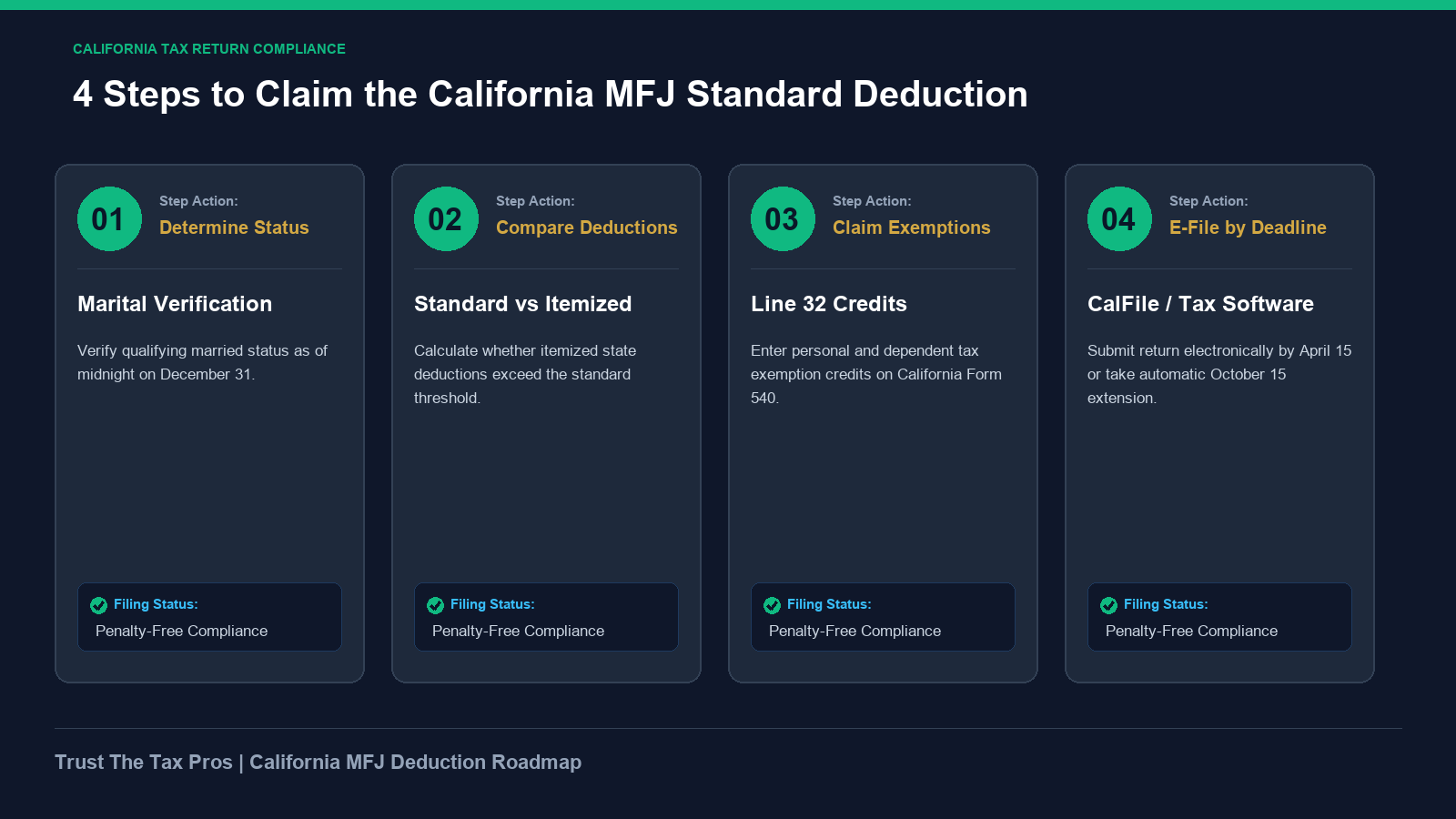
When to Itemize on California Form 540
Because California’s MFJ standard deduction ($11,412) is significantly lower than the federal MFJ standard deduction ($32,200), many California homeowners easily exceed the $11,412 state threshold when combining:
- Home Mortgage Interest: Deductible on California Schedule CA up to state debt limitations.
- Real Estate Property Taxes: While federal law caps SALT deductions at $10,000, California itemized deductions include eligible property taxes subject to state adjustment schedules.
- Charitable Donations: Cash and non-cash gifts to qualified 501(c)(3) charities.
- Unreimbursed Medical Expenses: Allowable medical expenses exceeding 7.5% of California AGI.
Check your state refund status in our CA state tax refund status guide.
Track important FTB filing dates in our CA state tax filing deadline guide.
Access official tax tables directly on the California Franchise Tax Board official portal.
If you need CPA assistance in Northern California, review advice from a Sacramento tax accountant.
Frequently Asked Questions
What is the California standard deduction for married filing jointly in 2026?
The California standard deduction for married couples filing jointly is $11,412 on Form 540 Line 18.
Can I itemize in California if I take the federal standard deduction?
Yes. California tax law allows you to itemize on California Schedule CA (540) even if you claim the standard deduction on your federal return.
How do California personal exemption credits work?
Exemption credits directly reduce your calculated state tax liability on Form 540 Line 32. Married couples filing jointly receive $288+ in personal exemption credits, plus additional credits for seniors and dependents.
Is the California standard deduction the same as the federal standard deduction?
No. The federal standard deduction for married couples is significantly higher ($32,200 for 2026), whereas the California standard deduction is $11,412.
Maximize Your California Joint Tax Return
Understanding the California standard deduction for married filing jointly ensures you claim the largest allowable write-off on your Golden State return. Compare your total mortgage, property tax, and charitable expenses against the $11,412 standard deduction threshold to determine whether itemizing on Schedule CA yields greater tax savings.
Consult a licensed California CPA or Enrolled Agent to optimize your state deductions and ensure full FTB tax compliance.