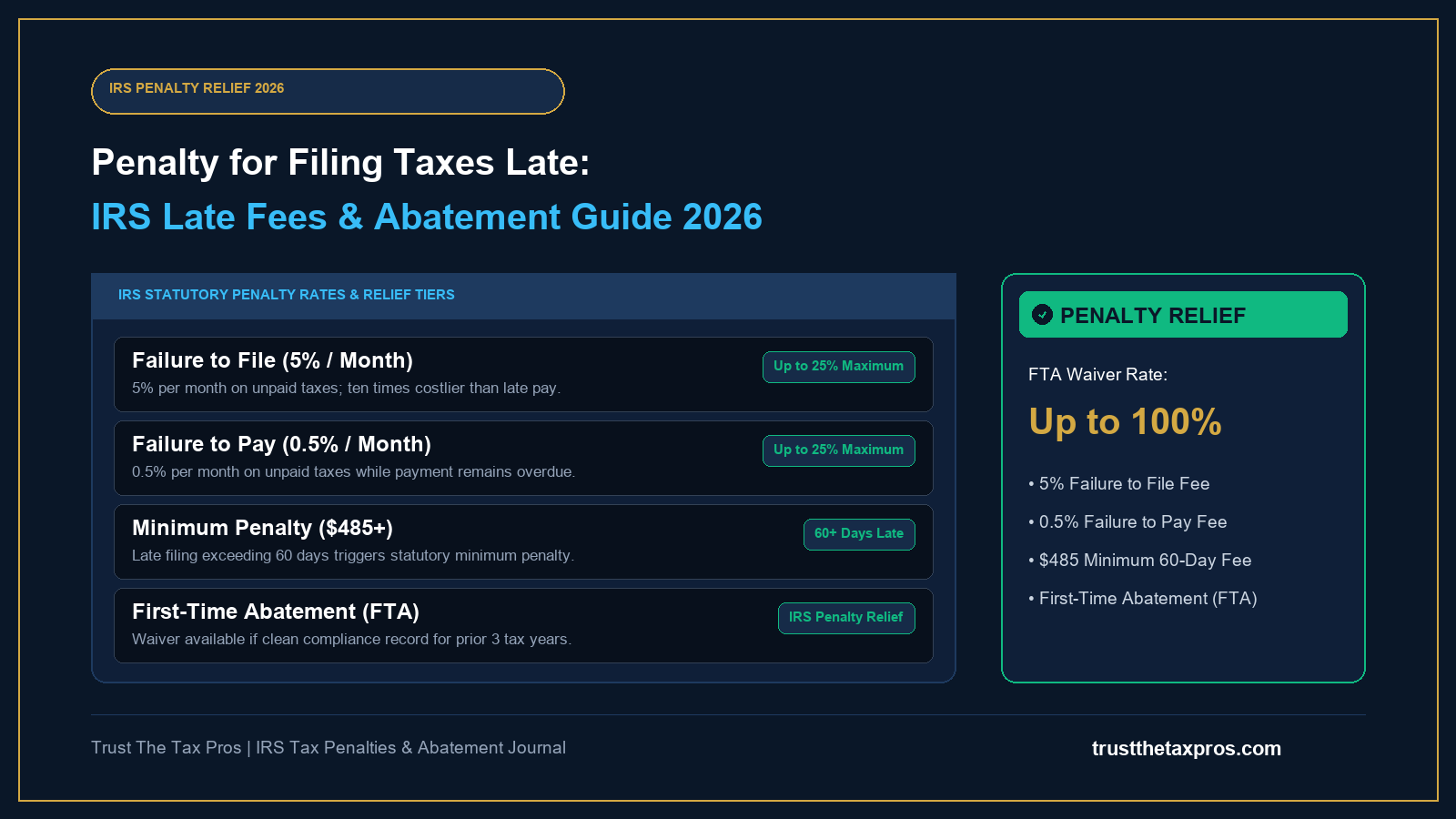
Missing the annual federal tax filing deadline can trigger immediate financial stress. However, understanding the statutory penalty for filing taxes late helps you take corrective action, minimize interest accumulation, and apply for penalty relief before compounding fines escalate.
The IRS imposes two separate penalties: the failure-to-file penalty and the failure-to-pay penalty. Because the failure-to-file penalty is ten times higher than the late payment penalty, filing your tax return on time (or requesting an extension via Form 4868) is essential even if you cannot pay the full balance owed.
1. Failure-to-File vs Failure-to-Pay Penalties
The IRS calculates late fees based on the amount of unpaid tax and the number of months the return or payment is overdue.
Key penalty distinctions include:
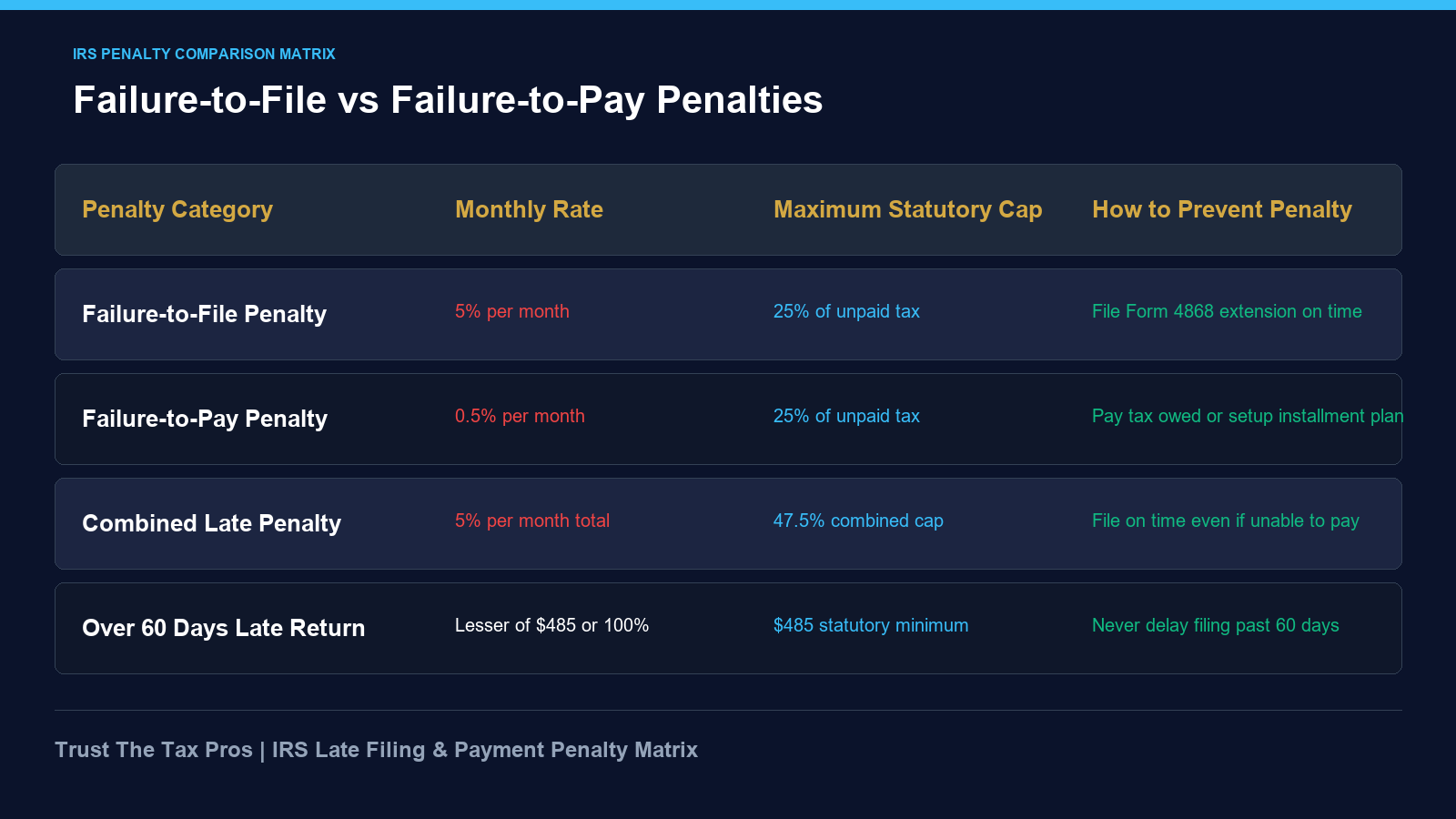
- Failure-to-File Penalty: 5% of unpaid taxes for each month (or fraction of a month) the return is late, capped at a maximum of 25%.
- Failure-to-Pay Penalty: 0.5% of unpaid taxes for each month the balance remains unpaid starting April 15, capped at a maximum of 25%.
- Combined Monthly Penalty Rate: If both penalties apply in the same month, the failure-to-file penalty is reduced to 4.5%, making the combined monthly penalty 5.0%.
- Over 60 Days Late Minimum Penalty: If your return is more than 60 days overdue, the minimum penalty is $485 or 100% of the unpaid tax, whichever is less.
| Penalty Category | Monthly Percentage Rate | Maximum Statutory Cap | Best Prevention Strategy |
|---|---|---|---|
| Failure-to-File Penalty | 5.0% per month | 25% of unpaid tax | File Form 4868 by April 15 |
| Failure-to-Pay Penalty | 0.5% per month | 25% of unpaid tax | Setup IRS Installment Agreement |
| No Tax Owed / Refund Due | $0 Penalty | $0 Maximum | Claim refunds within 3-year statute |
2. What Happens If You Are Owed a Refund?
A common misconception is that the IRS penalizes every taxpayer who files after April 15. If the IRS owes you a tax refund (or your total tax liability is zero), there is no penalty for filing taxes late.
While no late penalties apply when a refund is due, you have a strict 3-year deadline from the original return due date to claim your refund under Internal Revenue Code Section 6511. After 3 years, unclaimed refunds become property of the U.S. Treasury.
For individual filing strategies, explore our individual tax filing guide.
3. First-Time Penalty Abatement and Reasonable Cause Relief
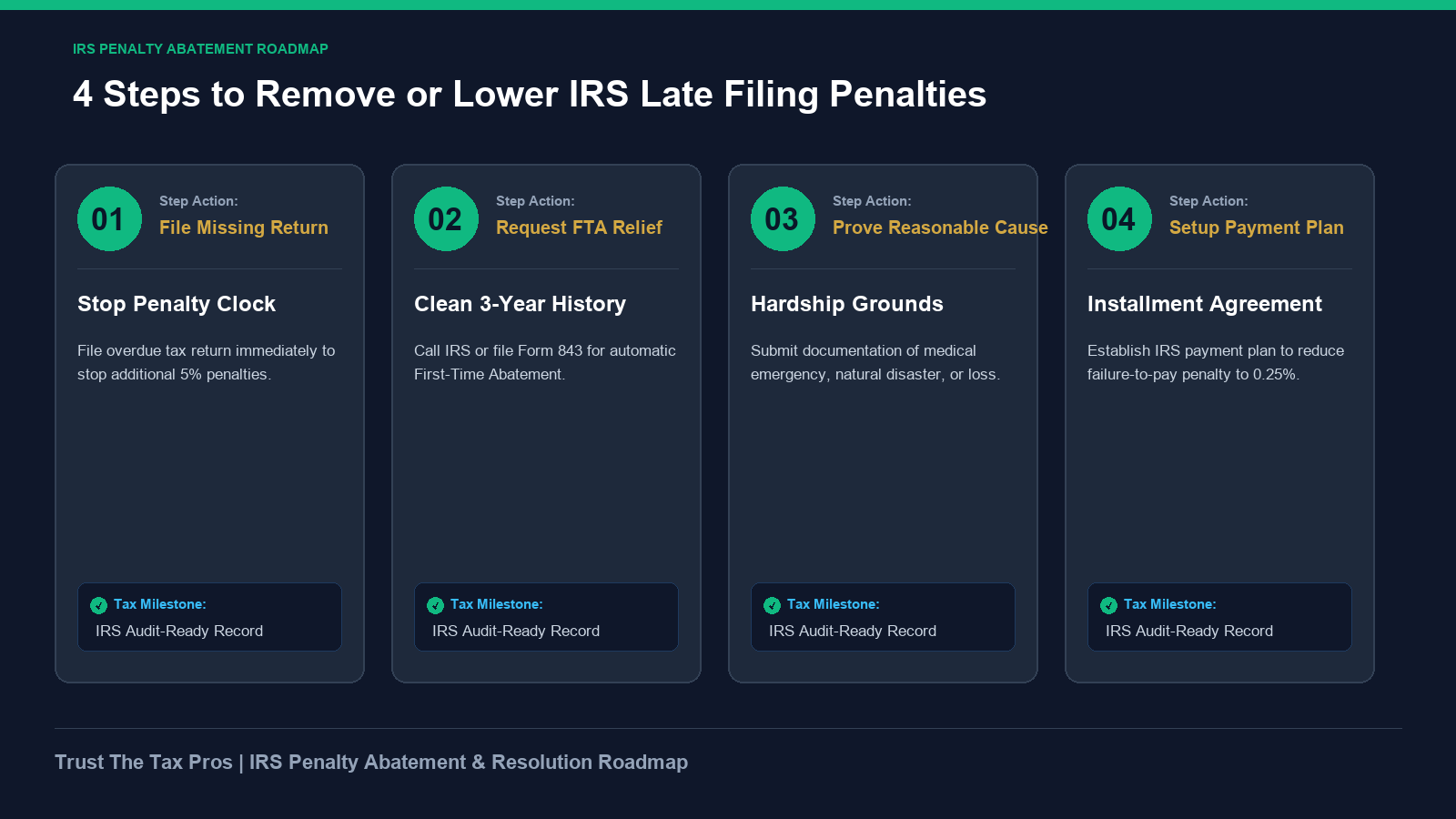
If you received an IRS penalty notice, you may qualify to have all failure-to-file and failure-to-pay penalties completely removed through official IRS relief programs.
How to Qualify for Penalty Relief
- First-Time Penalty Abatement (FTA): You qualify for an administrative waiver if you had no penalties assessed in the past 3 tax years, have filed all required returns, and have paid or arranged to pay any outstanding tax balance.
- Reasonable Cause Relief: The IRS waives penalties if you demonstrate that late filing resulted from circumstances beyond your control, such as a serious medical emergency, natural disaster, death in the immediate family, or unavoidable destruction of financial records.
- Statutory Exception (Form 843): Submit IRS Form 843 (Claim for Refund and Request for Abatement) or request relief by calling the IRS practitioner priority line.
Review comprehensive audit defense tips in our IRS audit avoidance guide.
Verify official federal relief standards directly on the Internal Revenue Service official portal.
If you need professional CPA assistance in Northern California, review advice from a Sacramento tax accountant.
Frequently Asked Questions
How much is the IRS penalty for filing late?
The failure-to-file penalty is 5% of unpaid taxes for each month your return is late, up to a maximum of 25%. If your return is more than 60 days late, the minimum penalty is $485 or 100% of unpaid taxes.
Is there a penalty for filing late if I am getting a refund?
No. There is no penalty for filing late if you are owed a tax refund. However, you must file within 3 years to claim your refund.
How do I get IRS late filing penalties removed?
You can request First-Time Penalty Abatement (FTA) by calling the IRS or submitting Form 843, provided you have a clean compliance record for the prior 3 tax years.
Does filing a tax extension prevent late payment penalties?
No. An extension (Form 4868) extends the filing deadline to October 15, which prevents the 5% failure-to-file penalty, but does not extend the deadline to pay taxes owed by April 15.
Resolve Late Tax Filings Today
Filing delinquent tax returns quickly is the most effective way to halt compounding failure-to-file penalties and interest charges. Organize your financial records, file missing returns immediately, and apply for First-Time Penalty Abatement.
Consult a licensed CPA or Enrolled Agent to resolve tax notices and establish affordable IRS payment agreements.