If you have missed one or several tax deadlines, you are probably asking yourself a critical question: how long can you go without filing taxes before the federal government takes aggressive action? Many taxpayers mistakenly believe that if enough time passes, the Internal Revenue Service simply forgets about old balances or writes them off under a statute of limitations.
That assumption is one of the most dangerous and expensive misconceptions in personal finance. In reality, the IRS possesses sophisticated automated tracking systems, and the legal clock works very differently than most people expect. Understanding your exposure, the true statutory deadlines, and your options for relief will help you resolve unfiled years before penalties multiply.
- No Statute of Limitations: If you do not file a tax return, the IRS can audit, assess taxes, and demand payment at any point in your lifetime. The three-year assessment limit never starts until an accurate return is submitted.
- The 3-Year Refund Forfeiture: If the IRS owes you money, you have exactly three years from the original due date to claim your refund. After three years, that money is forfeited forever to the U.S. Treasury.
- The 6-Year Policy Guideline: Under IRS Policy Statement 5-133, most non-filers only need to prepare the past six tax years to restore good standing and qualify for payment arrangements.
The Myth of “Waiting Out” the IRS: How Statutes Actually Work
A common misconception is that the standard three-year IRS audit rule protects individuals who skip filing altogether. Under ordinary rules, the IRS has three years from the filing date to examine a return and assess additional taxes. However, federal tax law contains a critical exception that catches unfiled taxpayers completely off guard.
Under Internal Revenue Code Section 6501(c)(3), if a taxpayer fails to file a return, the tax may be assessed or collected at any time without limitation. Because the statutory clock only begins ticking on the day you officially submit your Form 1040, an unfiled return remains legally open forever. The IRS can investigate and assess liability 10, 15, or even 20 years later.
For individuals who filed an incomplete return or missed a prior year, reviewing our guide on how far back can the IRS audit you provides essential clarity on audit windows and statutory exceptions.

The 3-Year Refund Forfeiture Rule (IRC § 6511)
Not every non-filer owes money to the federal government. Millions of Americans fail to file returns despite having excess federal income taxes withheld by their employers throughout the year. If you fall into this group, the IRS will not rush to contact you. Instead, silence works in the government’s favor.
Under Internal Revenue Code Section 6511(a), you must file a claim for a credit or refund within three years from the date the return was originally due, or within two years from the time the tax was paid, whichever is later. If you miss that strict three-year window, your hard-earned tax refund is permanently forfeited to the U.S. Treasury. The IRS will not issue a refund check, and you cannot apply the credit toward future tax debts.
Every year, the IRS announces hundreds of millions of dollars in unclaimed refunds that are about to expire. If you believe the IRS owes you money from three or four years ago, preparing your delinquent forms immediately is the only way to safeguard your cash.
The 10-Year Collection Statute: When Does the Clock Start?
Taxpayers frequently hear about the IRS 10-year collection limit and assume they can hide until that deadline passes. This rule, known as the Collection Statute Expiration Date (CSED) under Internal Revenue Code Section 6502, gives the IRS 10 years to collect outstanding unpaid tax balances.
Here is the critical catch: the 10-year CSED clock does not start on the date your tax return was originally due. The clock only starts on the date the IRS formally assesses the tax. An assessment occurs when you file a return showing a balance due, or when the IRS assesses a balance following an audit or a government-prepared tax return.
If you have unfiled tax years from eight years ago that the IRS has never assessed, the 10-year clock has not even begun. You cannot run out the clock on an unfiled tax return by remaining silent.
IRS Policy Statement 5-133: The Six-Year Enforcement Rule
If someone has failed to file taxes for 10 or 15 years, the prospect of gathering receipts, bank statements, and tax forms for over a decade can feel completely impossible. Fortunately, the IRS maintains a practical administrative policy for historic non-filers.
Under IRS Policy Statement 5-133, documented in the Internal Revenue Manual Section 4.12.1 Nonfiled Returns, IRS enforcement personnel are instructed to require tax returns only for the last six calendar years to bring a taxpayer back into filing compliance. This directive ensures practical administration without bogging down agents in ancient records.
Filing the most recent six tax years restores your account to “current compliance status.” This standing is mandatory if you intend to apply for an IRS installment agreement, an Offer in Compromise, or penalty relief. However, IRS management retains discretion to demand older returns if there is evidence of substantial unreported income or flagrant tax evasion.
Substitute for Return (SFR): When the IRS Files for You
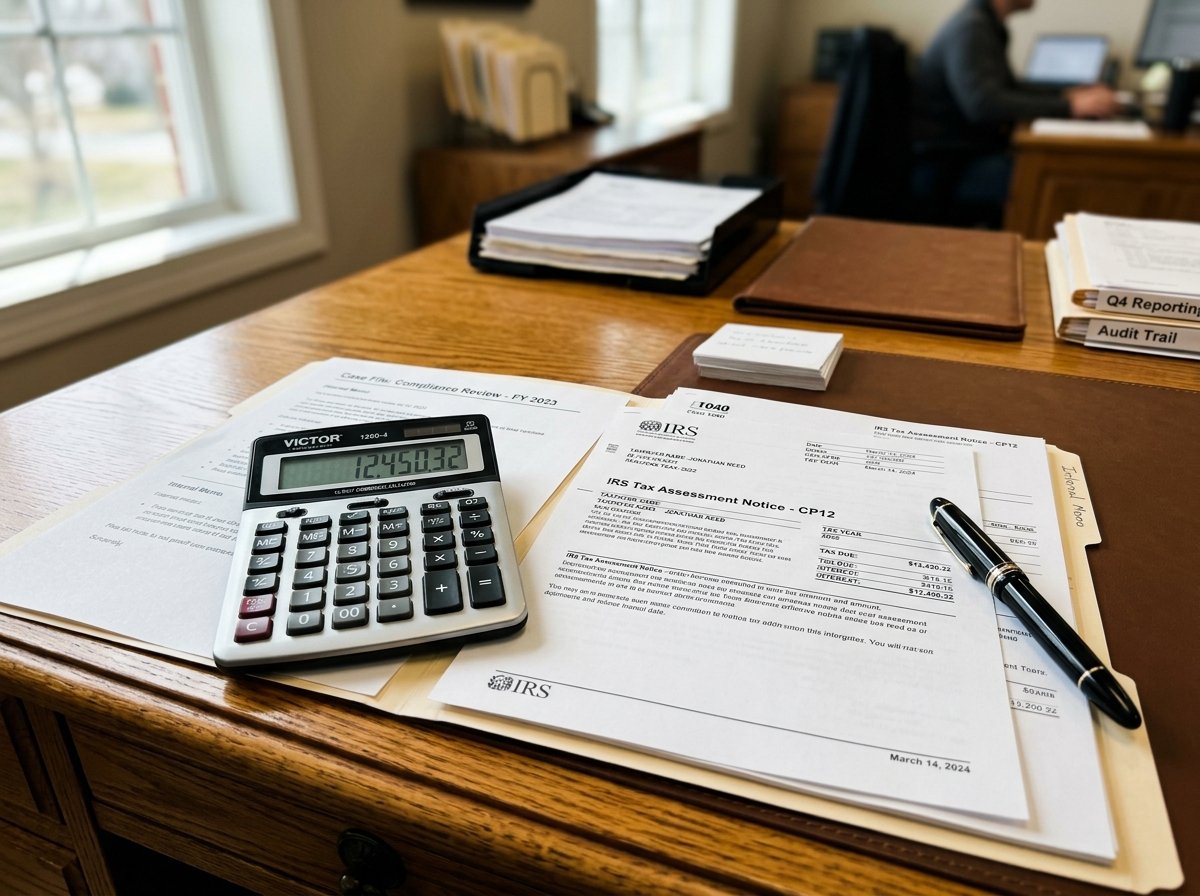
If you fail to file after receiving multiple reminder notices, the IRS will not wait forever. Under Internal Revenue Code Section 6020(b), the agency has statutory authority to prepare a Substitute for Return (SFR) on your behalf.
An SFR is never prepared in your financial favor. The IRS compiles all third-party information documents reported under your Social Security Number, such as Form W-2 wages, Form 1099-NEC nonemployee compensation, Form 1099-MISC payments, and Form 1099-B capital gains. The agency calculates your gross income without giving you credit for any deductions you might legally deserve.
When the IRS builds an SFR, they apply the most punitive assumptions allowed by law:
- Filing Status: Single or Married Filing Separately, denying advantageous Married Filing Jointly tax brackets.
- Standard Deduction: Only the basic standard deduction is applied, completely ignoring itemized expenses, charitable gifts, or mortgage interest.
- Zero Dependent Credits: Child tax credits and dependent care credits are excluded entirely.
- Zero Business Expenses: If you received 1099 freelance income, the IRS taxes 100% of the gross revenue without deducting business mileage, equipment, or supplies.
Once the SFR is completed, the IRS issues a formal Notice of Deficiency, commonly called a 90-day letter. If you do not challenge the assessment in U.S. Tax Court or submit an accurate original return within 90 days, the proposed tax becomes an unappealable legal assessment. To explore notice procedures, review our breakdown of what to do when you receive an IRS audit letter response.
- Artificially Inflated Tax: SFR calculations frequently show tax liabilities two to three times higher than what the taxpayer actually owes under normal filing rules.
- Bankruptcy Protection Lost: Taxes assessed through an IRS Substitute for Return can never be discharged in Chapter 7 bankruptcy, even after the standard statutory waiting periods expire.
- Immediate Levy Action: Once an SFR assessment becomes final, the IRS proceeds directly to automated bank levies, wage garnishments, and federal tax liens.
The True Financial Penalties of Not Filing
The financial consequences of unfiled returns grow substantially over time. The IRS imposes two primary delinquency penalties, and the penalty for not filing is ten times more severe than the penalty for not paying.
| Penalty Category | Statutory Rate | Maximum Cap | Statutory Authority |
|---|---|---|---|
| Failure to File (FTF) | 5% of unpaid tax per month | 25% of net balance | IRC § 6651(a)(1) |
| Failure to Pay (FTP) | 0.5% of unpaid tax per month | 25% of net balance | IRC § 6651(a)(2) |
| Minimum Late Filing Fee | Lesser of $485 or 100% of tax | Applies if over 60 days late | IRC § 6651(a) |
| Underpayment Interest | Federal short-term rate + 3% | Compounded daily without cap | IRC § 6621 |
As detailed in the IRS Failure to File Penalty Guidelines, if both penalties apply in any given month, the failure-to-file penalty is reduced by the failure-to-pay penalty amount. However, statutory interest compounds daily on both the unpaid tax principal and accrued penalties, causing balances to escalate rapidly.
For a detailed calculation of late filing charges, read our complete overview of the penalty for filing taxes late.
Beyond IRS Penalties: Hidden Consequences of Missing Returns
The damage caused by unfiled tax returns extends far beyond direct IRS billing statements. Missing returns ripple across your entire financial life:
- Loss of Social Security Work Credits: If you are self-employed or work as an independent contractor, failing to file Schedule SE prevents your earnings from being reported to the Social Security Administration. You risk losing retirement eligibility, disability coverage, and Medicare quarters.
- Inability to Secure Mortgages or Business Loans: Mortgage lenders, SBA loan underwriters, and commercial banks require official IRS tax transcripts for the preceding two to three years. If those transcripts do not exist, loan approval stops immediately.
- Passport Revocation or Denial: Under Internal Revenue Code Section 7345, the IRS certifies individuals with “seriously delinquent tax debt” (exceeding $62,000, indexed for inflation) to the U.S. State Department. The State Department will refuse to issue or renew your passport, and can revoke your current travel document.
- State Department of Revenue Enforcements: State tax agencies share data with the IRS. Once federal assessments hit the system, state revenue authorities issue their own non-filer assessments, often with harsher enforcement and professional license revocations.
Civil Non-Filing vs. Criminal Prosecution: Addressing the Fear
The single greatest obstacle that prevents taxpayers from contacting the IRS is the fear of imprisonment. Many individuals assume that admitting they missed years of tax filings will result in immediate handcuffs.
In practice, the IRS reserves criminal prosecution under Internal Revenue Code Section 7203 for cases involving affirmative fraud, illegal income schemes, or deliberate falsification of financial records. Tens of thousands of regular citizens miss tax deadlines every year due to severe illness, emotional trauma, divorce, or financial distress.
The IRS views unfiled returns primarily as a civil compliance problem. The government’s objective is to collect revenue, not incarcerate non-violent citizens who voluntarily step forward. For an in-depth legal examination of criminal thresholds, review our analysis on can you go to jail for not filing taxes.

Step-by-Step Action Plan to File Delinquent Returns
Catching up on past-due returns is a systematic process. By breaking the recovery down into clear administrative milestones, you can regain control of your financial future.
Step 1: Secure Your Official IRS Wage and Income Transcripts
Most taxpayers fail to file because they have lost their original tax documents. You do not need to contact old employers or search through years of cardboard boxes. The IRS retains copies of all third-party information returns filed under your Social Security Number for the last ten years.
You can access your transcripts immediately using the IRS Get Transcript Service online, or by filing Form 4506-T (Request for Transcript of Tax Return). These transcripts detail every Form W-2, 1099, 1098 mortgage statement, and IRA distribution reported under your name.
Step 2: Reconstruct Your Legitimate Deductions
While IRS transcripts provide your gross income data, they contain zero records of your deductions. To minimize your actual tax liability, gather bank statements, credit card statements, and mileage logs for the unfiled years.
If you operated an unincorporated trade or side hustle, review our complete individual tax filing guide to identify ordinary and necessary business expenses that directly reduce taxable net income.
Step 3: Prepare the Last Six Years of Tax Returns
In accordance with IRS Policy Statement 5-133, have a licensed CPA or Enrolled Agent prepare complete, accurate returns for the preceding six tax years. Prioritize older years first to ensure any remaining refund rights within the three-year window are preserved before they expire.
Make sure every return is submitted on the correct prior-year tax forms, as tax brackets, standard deductions, and phase-outs change with each tax season.
Step 4: Request Penalty Abatement
Once your returns are processed and the tax is calculated, do not automatically pay the delinquency penalties. You have statutory avenues to reduce or eliminate these charges:
- First-Time Penalty Abatement (FTA): If you had a clean filing history for the three tax years prior to your first unfiled return, the IRS will waive your failure-to-file and failure-to-pay penalties under administrative first-time relief.
- Reasonable Cause Relief: If your failure to file was caused by circumstances beyond your control, such as a major medical crisis, natural disaster, severe family death, or civil disruption, you can request penalty forgiveness by submitting Form 843 with corroborating documentation.
Step 5: Select a Manageable IRS Resolution Program
If you owe back taxes that you cannot afford to pay in a single lump sum, the IRS offers multiple administrative relief options once you achieve filing compliance:
- Installment Agreement: Establish a monthly payment plan spanning up to 72 months based on your balance and financial profile.
- Offer in Compromise (OIC): Settle your total tax liability for less than the full amount owed if you can demonstrate that paying in full creates severe economic hardship.
- Currently Not Collectible (CNC): Place your account on temporary hardship hold if your living expenses exceed your monthly income, halting all collection levies.
Statutory Summary: Timelines for Unfiled Tax Returns
| Compliance Milestone | Applicable Time Limit | Statutory Consequence |
|---|---|---|
| Audit & Assessment Window | Indefinite (No limit) | IRS can assess taxes at any time until an original return is filed under IRC § 6501(c)(3). |
| Refund Claim Expiration | 3 Years from Due Date | Unclaimed refund money reverts permanently to the U.S. Treasury under IRC § 6511(a). |
| Filing Compliance Standard | Past 6 Tax Years | IRS Policy Statement 5-133 restores good standing for payment plans and settlement offers. |
| Collection Statute (CSED) | 10 Years from Assessment | IRS collection powers expire 10 years after formal assessment, but unfiled years never start this clock. |
Frequently Asked Questions
What happens if you have not filed taxes in 5 years?
If you have not filed taxes in five years, the IRS statute of limitations on assessment remains completely open. If you owe tax, monthly late-filing and late-payment penalties continue to accumulate alongside daily compounding interest and if you were owed a refund for the first two of those five years, that money is permanently lost to the government under the three-year refund forfeiture rule.
Does the IRS forgive unfiled taxes after 10 years?
No, the IRS does not forgive unfiled taxes after ten years. The well-known 10-year collection statute only begins once a tax balance has been formally assessed. If you never submitted a tax return and the IRS has not completed an assessment, the 10-year collection clock has never started running. Waiting ten years without filing will not clear your tax debt.
Can you get a refund if you file 4 years late?
Under Internal Revenue Code Section 6511(a), you cannot receive a refund if you file four years late. Taxpayers must submit their return within three years of the original April filing deadline to claim their refund check or apply it to another tax year. After three years, the U.S. Treasury absorbs the funds permanently.
How does the IRS know if you did not file a return?
The IRS uses the automated Information Returns Program (IRP). Every January and February, banks, employers, brokerages, and clients submit copies of Forms W-2, 1099, and 1098 to the IRS. Agency computer mainframes cross-reference these information returns against filed Form 1040s. When income appears under an SSN without a matching return, the system triggers automated non-filer notices.
What is IRS Policy Statement 5-133?
IRS Policy Statement 5-133 is an internal enforcement directive outlined in the Internal Revenue Manual. It instructs IRS agents that individuals who have missed multiple years of tax filings typically only need to file the last six years of delinquent returns to be considered in full filing compliance. This allows taxpayers to enter installment plans or negotiate tax relief without preparing ancient records.
Will the IRS arrest you immediately for unfiled taxes?
No, the IRS will not arrest you immediately for unfiled returns. The vast majority of delinquent tax situations are handled as civil compliance issues resolved through financial notices, penalties, and payment arrangements. Criminal charges under Internal Revenue Code Section 7203 require evidence of intentional, willful evasion, which is exceptionally rare for individuals who voluntarily come forward to file back returns.